Choosing the right demolition contractor in India is an important decision for any building, factory, warehouse, commercial property or industrial redevelopment project. Demolition involves much more than simply breaking down a structure. It requires proper planning, experienced manpower, specialized demolition equipment, safety procedures, debris management and an appropriate demolition method for the structure and surrounding site.
Whether you are searching for demolition contractors, a demolition company near me, building demolition services, industrial demolition contractors, or specialists in controlled demolition, understanding what to look for can help you select a contractor suited to your project.
A professional demolition contractor plans and carries out the safe dismantling or demolition of buildings and structures.
Depending on the project, demolition services can include:
Indian contractors currently offer a wide range of these methods, including high-reach demolition, robotic demolition, diamond concrete cutting, core drilling, structural dismantling and mechanical demolition.
The correct solution depends on the building’s construction, height, structural condition, available working space, surrounding properties and project requirements.
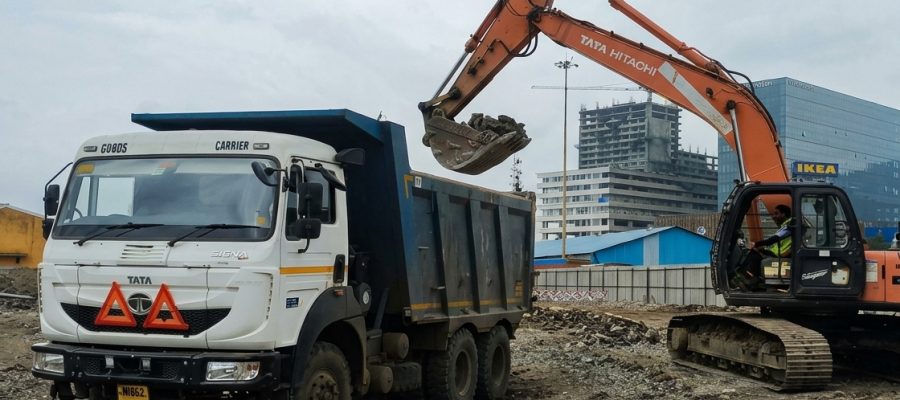
A demolition project can involve heavy machinery, reinforced concrete, steel structures, unstable sections, falling debris, dust, noise and nearby properties or operating facilities.
For this reason, choosing a professional demolition company should not be based on price alone.
An experienced contractor should evaluate the site before determining how the structure should be demolished. Factors such as structural type, building height, access, surrounding properties and available working space can influence the demolition method.
This becomes particularly important for industrial demolition, where demolition may need to take place close to operating equipment or other structures.
Start by reviewing the contractor’s actual demolition experience.
A contractor experienced mainly in small residential projects may not necessarily have the equipment or expertise required for a large factory, RCC structure or industrial plant.
Ask whether the company has completed projects involving structures similar to yours.
For example, a capable building demolition contractor may have experience with:
Residential buildings: houses, apartments and redevelopment properties.
Commercial buildings: offices, hotels, shopping complexes and institutional buildings.
Industrial structures: factories, warehouses, manufacturing facilities, industrial sheds and process structures.
RCC structures: reinforced concrete slabs, beams, columns, foundations and complete RCC buildings.
Current Indian demolition providers distinguish these categories because industrial, commercial, RCC and structural dismantling projects can require different methods and equipment.
There is no single demolition method suitable for every structure.
A professional demolition contractor in India should determine the technique after assessing the site.
Mechanical demolition uses equipment such as excavators, hydraulic breakers, crushers and demolition attachments.
It is commonly used for complete building demolition where sufficient working space is available.
Controlled demolition is used when sections of a structure must be removed carefully or when surrounding buildings, equipment or infrastructure need additional protection.
Precision techniques can help reduce unwanted impact on adjoining structures.
Selective demolition removes specific parts of a building while other portions remain.
Examples include removing:
For taller structures, specialized high-reach demolition equipment may be required.
The appropriate approach depends on factors including building height, concrete grade, surrounding space, available time and structural condition.
Demolishing reinforced concrete can require different techniques from demolishing brick or steel structures.
If your project involves RCC, search specifically for an RCC demolition contractor or concrete demolition contractor with the appropriate equipment.
Modern RCC demolition methods can include:
Diamond wire sawing for precision cutting of thick reinforced concrete.
Wall sawing for controlled cuts through concrete walls and slabs.
Core cutting for creating accurate openings through RCC structures.
Hydraulic breaking and crushing for mechanical removal of reinforced concrete.
Robotic demolition for certain confined or higher-risk environments.
Indian demolition specialists currently advertise combinations of diamond wire sawing, concrete crushing, core cutting, robotic demolition and hydraulic/mechanical methods for RCC work.
If you need to demolish a factory, manufacturing facility, warehouse or industrial structure, look specifically for an industrial demolition contractor.
Industrial demolition can be considerably more complex than conventional building demolition.
Projects may involve:
Industrial demolition contractors may also need to coordinate demolition around existing plant operations.
Indian contractors serving this segment emphasize site assessment, demolition planning, controlled dismantling, concrete cutting, dust suppression, waste segregation and specialized machinery.
Safety should be one of the most important considerations when comparing demolition companies in India.
Before demolition begins, the contractor should understand the structure, surrounding environment, machinery access and potential hazards.
Depending on the project, planning may include:
A contractor should be able to explain how the building will be demolished, rather than simply quoting a price to remove it.
The equipment available to a contractor can directly influence what types of projects the company can undertake.
Depending on your project, useful equipment may include:
Excavators for mechanical building demolition.
Hydraulic breakers for breaking concrete.
Concrete crushers for controlled concrete removal.
High-reach excavators for taller buildings.
Diamond wire saws for precise reinforced-concrete cutting.
Core drilling machines for controlled openings.
Robotic demolition equipment for specialized environments.
Indian demolition specialists currently advertise many of these technologies for controlled demolition, RCC demolition and industrial projects.
The largest machine is not automatically the best solution. Equipment should match the structure and site conditions.
Demolition inevitably creates some environmental impact, but proper planning can reduce unnecessary dust, vibration and disruption.
This is particularly important when demolition occurs near:
Methods such as water spraying can help suppress dust, while diamond cutting and selective demolition may be useful where greater precision or reduced vibration is required.
Indian demolition providers specifically market precision cutting and controlled methods as options for reducing vibration, dust and disruption in appropriate applications.
A demolition project does not finish when the building comes down.
Concrete, reinforcement steel, structural steel and other demolition materials must be sorted, handled and removed appropriately.
A complete building demolition service may therefore include:
Demolition → material segregation → scrap recovery → debris removal → site clearance
Some Indian contractors now explicitly include waste segregation, material recovery, recycling and final site clearance within their demolition services.
Ask the contractor what is included in the quotation so that waste removal does not become an unexpected additional cost.
It is natural to search for building demolition cost in India, but demolition prices can vary considerably.
Cost can depend on:
Indian dismantling providers similarly identify built-up area, height, structural type, location, machinery access and demolition method as major cost factors.
For this reason, two demolition quotations may not include the same scope.
Instead of selecting the lowest quotation immediately, compare what each demolition contractor actually includes.
For substantial projects, a site inspection can help the contractor understand the structure and recommend an appropriate approach.
During the assessment, the contractor can evaluate:
Structure: RCC, masonry, steel or mixed construction.
Height: whether standard or high-reach machinery may be required.
Access: whether excavators and trucks can safely enter and operate.
Surroundings: proximity to neighbouring buildings and active facilities.
Demolition scope: complete, partial or selective demolition.
Material handling: debris removal, segregation and site clearance.
Site-specific assessment is especially important because Indian dismantling providers note that structure, height, access routes, utilities and surrounding properties can determine which demolition method is feasible.
© 2026 Created With Star Construction
This website uses cookies to provide you with the best browsing experience.